



Abstract
Considerations for designing needs assessments of distance learning programs for informed decisions in postsecondary science, technology, engineering, and mathematics (STEM) education are explored. Needs assessment methods and models should change to keep up with developments in distance learning, placing a greater emphasis on determining with accuracy the “what is” and “what should be” conditions. A well-done needs assessment study provides context-specific, accurate information essential for making meaningful policies for the success of distance learning programs in postsecondary STEM education. Relevant features of the needs assessment are discussed with recommendations. Needs assessment of distance learning programs in postsecondary STEM education remains a promising area for research and development.
Keywords: Needs assessment, distance learning, STEM, postsecondary, artificial intelligence
Introduction
In the first quarter of the twenty-first century, distance learning became an integral part of post-secondary science, technology, engineering, and mathematics (STEM) education. Understanding both the current and desired states of distance learning programs through needs assessment at the program level is vital for making informed decisions and policies. The unprecedented global shutdown during the COVID-19 pandemic accelerated the adoption of distance learning beyond traditional models, as it became the primary means of delivering STEM instruction worldwide. During this period, innovative platforms proliferated, and global demand for distance learning technologies doubled in 2021 (Carey, 2022). This “so-called attempted takeover of teaching by technology” in postsecondary education was foreseen decades ago (Kumar, 2003, p. 129). In this context, it is worth exploring some salient principles and practical methods for designing needs assessments to transform distance learning programs in postsecondary STEM education.
Traditionally, needs assessments in online learning are framed within instructional design, focused on aligning instructional strategies with learning objectives and identifying learner knowledge gaps (Dupin-Bryant & DuCharme-Hansen, 2005). This is critical in guiding every subsequent decision (Rothwell & Sredl, 2000). Nevertheless, this essential step is often bypassed as it is viewed as time-consuming, overly technical, or only useful to instructional designers (Rothwell & Kazanas, 2015). Some faculty may also assume that their familiarity with student needs is sufficient, overlooking the added complexity of designing fully online STEM degree programs. Adding to these potential barriers, the global pandemic revealed even more limitations of this narrow approach.
Although offering STEM courses and degree programs online was necessary during the pandemic, it was often a rushed process. Consequently, common problems arose when STEM departments implemented changes to online programs (Kumar, 2021) without a comprehensive needs assessment. Little to no time was afforded for needs assessment of available modalities to ensure a good match between course content and delivery method. Not all STEM content is suitable for online delivery; therefore, a variety of hybrid models have emerged with varying levels of online and on-campus instruction. On-campus sessions often serve to build community within a course or cohort, facilitate group activities, or provide hands-on interaction with specialized equipment such as in chemistry labs. In contrast, HyFlex models offer students the flexibility to attend in-person classes that are livestreamed and recorded, allowing multiple forms of engagement with the instructor. The decision to use asynchronous delivery introduces additional considerations, such as whether to utilize text-based materials, recorded lectures, or a combination of both. STEM classes must consider how to address lab activities involving virtual labs, delivery of lab kits, or on campus lab requirements. Offering lab experiences is difficult when expensive lab equipment is required to meet academic goals for hands-on learning experiences. For example, graduate students may prefer text-based formats for efficiency, while entry-level courses may benefit from interactive multimedia presentations to maintain engagement. Live videoconferencing remains essential when preserving faculty-student interaction is a key priority. Student preferences and the availability of necessary technology further influence the optimal modality for course delivery.
Beyond individual learner factors, needs assessments are influential in shaping broader instructional decisions. Ahyanuardi et al. (2022) emphasize the tool’s utility in identifying misalignments between course goals, content, and delivery, while Pathoni et al. (2021) highlight its ability to reveal content-specific obstacles such as limited access to media or ineffective digital pedagogy. Furthermore, technological choices should not be made based on novelty or vendor pressure alone but aligned with pedagogical goals and learner capabilities (Chang & Lee, 2022). Other pitfalls include changes often driven by administrative pressures, the allure of external grants, or fascination with new technologies, rather than student needs or pedagogical imperatives (Kumar, 2021). These misaligned decisions can lead to ineffective implementation due to issues such as digital literacy gaps, lack of accessibility, or insufficient infrastructure support. As Perkins (2019) warns, assessments conducted without considering system interdependencies may yield misleading or invalid outcomes.
As the world adjusts and begins to pave its way in the post-pandemic era, higher education institutions are afforded an opportunity to revisit and refine program-level needs assessments to improve instructional design, delivery modes, student support systems, and technological tools, as well as consider the feasibility of expanding online programs. As online learning becomes more embedded in STEM education, needs assessment must evolve into a transformative process that goes beyond instructional planning. It should encompass a more holistic assessment of student readiness, institutional capacity, and technological infrastructure to determine if online learning is feasible, sustainable, and capable of fostering long-term change (Perkins, 2019).
A systemic approach to needs assessment is particularly essential in STEM disciplines, which face unique challenges such as the difficulty of replicating hands-on lab experiences online, reliance on specialized software, and the need for consistent access to technical resources (Keebler & Huffman, 2020). Addressing these issues requires a model of needs assessment that includes diagnostic (e.g., readiness of students, faculty, and infrastructure), formative (e.g., iterative instructional improvements), and strategic (e.g., long-term viability) components. As post-secondary institutions are continually evolving in response to industry demands and changes, the decision to offer new degrees, especially online is momentous. Diamond (2008) provides a framework for developing new academic programs, encouraging departments to consider program importance, job market fluctuations, student characteristics, and faculty involvement. Stewart and Cuffman (1998) argued for needs assessment of distance education involving interactive television. With the rise of online education, Wang and Gearhart (2006) addressed crucial factors such as institutional readiness, faculty preparedness, learner readiness, and access to instructional tools. These expanded considerations appear to be even more essential today, particularly for STEM programs where lab simulations may replace physical experiments. Institutions must ensure not only course delivery, but also student support services such as advising, financial aid, tutoring, counseling, accessibility accommodations, and career placement are fully available online to ensure equity.
As many institutions transition from traditional face-to-face to hybrid or fully online models, faculty training and development have also become priorities. This training often incorporates evidence-based practices, pedagogical research, and certification to ensure quality online instruction. Some institutions have developed internal eLearning centers or formed external partnerships to support course development and faculty readiness. Additionally, onboarding support for students is essential, especially for those with limited prior experience in online learning environments.
Ultimately, all these factors become part of a comprehensive needs assessment framework. The central questions include: How important is it for a degree to be available online? Does the labor market support the value of an online degree in that STEM area? Are students able to succeed in an online format? Does the department have sufficient faculty trained in online teaching? And most importantly, how can institutions ensure that online lab activities develop the same skills as traditional hands-on labs?
By repositioning needs assessment as a multidimensional process beyond its traditional instructional design role institutions can make more strategic, equitable, and sustainable decisions about offering online STEM degree programs. This re-centered approach ensures that online learning is not only well-designed but also contextually viable and genuinely student-centered.
Why is needs assessment important for distance learning in STEM education?
Needs assessment is critical to developing, implementing and sustaining distance learning programs in postsecondary STEM education. In efforts to broaden participation in STEM, gaining an understanding of the needs of all students would enable institutions to develop programs tailored towards meeting their academic needs (McIntyre et al., 2025; Weldman & Diggs, 2001) and what can be taught online and what cannot. For example, not every science lab activity can be reproduced online without considerably compromising kinesthetic experience and associated real-world based cognition and meaning learning outcomes. Due to safety reasons, and fiscal and human resource limitations, delivery of lab equipment such as microscopes, scales, machines required for engineering labs, and supplies such as acid and alkali to the home is impossible. Experiments involving chemicals conducted in home environments can have uneven results based on atmospheric conditions or multiple other variables that are introduced outside of carefully controlled lab environment.
McIntyre et al., (2025) found that STEM students expressed experiences that are more negative compared to non-STEM students about online courses due to lower performance outcomes, lower rates of enjoyability, and less flexibility requiring additional effort. As a result, the authors suggested flexibility in course delivery mode. In this digital age, distance learning delivery mode is slowly but steadily replacing traditional face to face lectures in STEM disciplines, therefore, now, is a critical time to develop effective needs assessment strategies for designing distance learning programs in postsecondary STEM education. “Efforts to improve the quality of online education should take disciplinary differences into account - there is no one-size-fits-all solution” (McIntyre et al., 2025, n. p.). In this context, needs assessment has an important role to play in postsecondary distance learning programs in STEM.
What is needs assessment?
Needs assessment is not a pedagogy or educational testing strategy; it is the “process of determining, analyzing, and prioritizing needs and identifying and implementing needs-based solution strategies to high-priority needs” (Altschuld & Kumar, 2005, 2010, p. 154). It is a comprehensive process of identifying needs to make informed decisions about identifying priorities. Also, it enables information necessary for identifying, locating and allocating resources. In the event new resources are unavailable, present resources such as fiscal, human, and material (e.g., laboratory equipment) already in place will have to be moved around within the workplace. Due to the possible reconfiguration or acquisition of such various resources, a small group of individuals is crucial to conduct needs assessments with at least one person knowledgeable in needs analysis. Even though needs assessments are “organizational,” involving government institutions, academic institutions, community organizations, and businesses it is essential for a department to also include their needs and evaluation of resources in the assessment. Overall, needs assessment uses an evaluative research method to enable important decisions for major changes within programs, curricula, and organizations based upon the data gathered as a critical component for the expansion of distance learning in postsecondary STEM education.
Need in needs assessment: Measuring discrepancy
A need, from a needs assessment perspective, is the measured discrepancy between two conditions: the current state ("what is") and the desired state ("what should be") (Altschuld & Kumar, 2010). For example, consider the statement: "Undergraduate students in software engineering need more practice and time to achieve mastery." While this may sound like a need, it is a solution plan, not a true need. It implies a gap (students not mastering the material), but it lacks a measurable discrepancy between the current and desired states. Practice and time are strategies to address the problem, but the problem itself is not fully understood, nor are the specific causes of the need identified. An example of the “what is,” “what ideally should be,” and “what is likely” conditions follow:
- Area: Software engineering in a public university.
- What is: Professional society standards required for courses for a university degree in software engineering.
- What ideally should be: Considering the academic competencies and workforce skills required for survival in this twenty-first century, what software engineering standards are developed for students entering universities this year?
- What is likely: What can a complex, multidimensional program like software engineering in a public university offered through distance learning reasonably expect to change?
“What is” and “what should be” states
The following suggestions are essential to maintaining focus when conducting a needs assessment. Understand the distinction between solution and need, and how it could impact the process and outcomes of needs assessment (Altschuld & Witkin, 2000). Unsuitable solutions could cost the university fiscal resources, besides time and energy. Ellis (2018), in dealing with training and development projects, noted that “many professionals immediately race to create course materials and roll out initiatives without upfront assessment of what is driving the need or how to ensure results. They often operate in an “order taker” mode, relying on information from the requester about content, learner needs, the duration of training, and project completion deadlines” (n.p.). According to Kaufman (1987), though people frequently do not know what they should have, they typically know what they desire.
Arguably, some needs assessment studies may be more about sensing or inferring needs rather than clearly identifying the discrepancy between the state of “what is” and the state of “what should be” (Lewis, 2006). In dealing with technology education, Flowers (2001) noticed that in studying university technology programs, often “characterization of potential learners and their needs has not been performed” (p. 17). Relying solely on stakeholder opinions about what the needs are may hinder the needs assessment committee from accurately identifying the discrepancies. The “what should be” and “what is” states can be challenging to assess because they vary across disciplines within the same postsecondary system. For example, the needs in distance learning for a software engineering program are different from those in an educational technology program. Often, “what should be” is value driven. In software engineering, for instance, what should university graduates know about developing effective artificial intelligence applications when they complete their degree program? This is an important question in postsecondary STEM education, and a well-conducted needs assessment could provide valuable insights.
As a postsecondary program is considering the “what should be” state in a distance learning program in STEM, here are a few considerations: (a) Subject disciplines of the students that would be participating in the online STEM degree program, (b) Purpose of the online delivery of the degree (Is it to expand the access to those outside of the traditional catchment area, or is it to increase access to non-traditional students that are driving to campus to take courses?), (c) Types of computers, mobile devices, and internet technology utilized by students. For example, rural areas without a reliable, fast internet connection would need instruction that is accessible with quick downloads, and (d) Institutional infrastructure to provide all student services to apply and enroll online.
General steps in designing needs assessment for a STEM degree program
Generally, designing a needs assessment involves the following steps (Altschuld & Kumar, 2005, 2010; Witkin & Altschuld, 1995). Step one, determine the degree that can be offered fully online for the assessment. Next, determine and rank the "what should be" state and compare it to the present state, or "what is." For step three, identify and rank order discrepancies with an emphasis on the widest discrepancies. With a good picture of what should be, the information assists in the development of a solution plan. Finally, create an implementation plan for gathering the required information for the analysis of the needs. Most importantly, remember to evaluate the needs assessment process. This can be an iterative process to ensure the information gathered meets the goals of the assessment plan. Evaluation of the plan also occurs at the conclusion of the process to again determine if the data gathered meets the goals or if additional goals are required to obtain a complete picture of the needs. The needs assessment steps, processes, and models discussed are flexible within valid and reliable research methods depending on the context of distance learning in postsecondary STEM education.
Models
One could envision needs assessment as a “partly technical and partly artistic” research method (Altschuld & Kumar, 2010, p. 29). A note should be made that there is no one size fits all model of needs assessment. Many approaches and models for assessing needs exist, and they include the Organizational Elements Model (OEM) (Kaufman, 1987) and the Process Model (Witkin & Altschuld, 1995; Altschuld & Witkin, 2000). OEM emphasizes outcome-driven results at the system level. The process model focuses on efficiency and sequence of operational activities, complementing the interdisciplinary nature of STEM. Both models are well suited for STEM context as it prioritizes measurable student performance, workforce readiness, and program effectiveness. The context of the needs assessment and the nature of the tools, such as surveys and focus groups, will influence program decisions related to the delivery of instruction and the academic goals. This thoughtful process complements the interdisciplinary and sequential nature of STEM learning by examining the efficiency and alignment of instructional and operational activities across courses, labs and support systems. To reduce bias, the needs assessor should have knowledge of the context and an understanding of the tools and methods involved. For designing needs assessment of distance learning in STEM education both models have components that are valuable in the gathering of data critical to making informed decisions. A part of the needs assessment process is to select the appropriate model that fits the situation. Descriptions of the models below assist the assessment team in the selection of the process that is the best match for obtaining the information required to make thoughtful and appropriate decisions.
Organizational elements model
The Organizational Elements Model (OEM) (Kaufman, 1987) has three levels for the identification of needs: the external/mega level, the internal/macro level, and the quasi-needs/micro level. At each level, the discrepancies between “what is” and “what should be” states must be evaluated (Altschuld & Kumar, 2010; Kaufman, 1987). The results of the analysis at the three levels influence decision-making into the delivery formation of the various courses based upon the instructional goals and the types of equipment needed, what online instructional tools can replace on campus experiences, the resources required to offer courses online, and what modality of delivery is the best match for the STEM content and the program at the institution.
At the external/mega level, societal needs such as human development in terms of physical, emotional, and economic well-being are the focus of the needs assessment (e.g., an educational technology major distance learning program could meet the needs of students across geographical boundaries in paving the way for a well-informed and educated citizenry essential to the prosperity and survival of a nation). A STEM degree program may be looking for their online degree to have a broader reach and ensure the quality of the program. For both goals to be successful, departments have several external considerations, including the types of technology available for the delivery of distance learning, student support services required for student success, professional development in teaching STEM online, and instructional design support at the institution. The goal is to evaluate if the institution has the level of support for distance learning for student success in an online program.
Next, at the internal/macro level, the focus is on the type of products made and the type of human resources created by institutions and organizations as they relate to achieving mega-level goals and achievements (e.g., preparation of software graduates who contribute to the workforce and economic strength of a nation). For a postsecondary institution, the primary products produced are the degree programs offered through the different colleges or schools. For the online degree programs, decisions about the use of faculty resources are important to expand the programs. The following are part of the decision-making process. Will the online program require additional faculty or adjunct instructors? Will the program expand, requiring additional advisors? Does the unit have the resources to provide marketing technical support? Again, these decisions are about the availability of resources and are important to proceed with offering the STEM program online.
The quasi/micro level examines the inputs, resources, and procedures that organizations used to achieve results on an internal/macro level, which then translates to an external/mega level (e.g., recruiting highly qualified software engineering faculty members capable of delivering instruction through distance learning gives college and university students an opportunity to excel in software engineering across geographical boundaries). At the department level, the student becomes the center of the concern. The department focuses on ensuring the quality of the courses and offering the courses in a timely manner. The action occurs at this level. Depending upon the decision to proceed with the online program, the department begins hiring of additional faculty or reassigning current faculty from face-to-face classes to online courses. If the resources are available, faculty may be required to collaborate with instructional design team members in the design and development to the courses which will become hybrid or online.
Process model
Steps in the Process Model, a generic three-phase model of needs assessment, include problem identification, identifying data sources, data collection, data assessment, and recommendation (Altschuld & Witkin, 2000; Altschuld & Kumar, 2010; Witkin & Altschuld, 1995).
Phase 1 is pre-assessment, the foundation of the needs assessment, focusing on the main concerns. Key steps include forming the needs assessment committee and, from data sources, learning about the preliminary conditions (“what is” and “what should be”). In addition to STEM program area faculty, the needs assessment committee should be composed of stakeholders in the community that will eventually hire graduates from the STEM degree program and students in the program. If possible, include the instructional design team, student services, and technology support representatives on the team. These additional individuals can provide insight into the services available to provide support for the students and distance learning delivery options.
Phase 2 is assessment, to gain a first perception of the basis of needs and conduct a more in-depth examination of needs. Key steps include identifying and prioritizing discrepancies and assessing the “what is” and “what should be” conditions, causally analyzing needs. With the appropriate individuals at the table and based upon the resources available, the committee can determine if a STEM degree can be 100% online or if a hybrid or HyFlex approach might work better to achieve the “what should be” condition. If the committee identifies a service that needs to be available for the delivery of the online program or availability of technologies, then the appropriate individuals can put in place a plan to develop or purchase the resources required.
Phase 3 is post-assessment, to take steps to resolve the problem underlying the need. Key steps include developing and communicating action plans, making final decisions to resolve needs, and evaluating the needs assessment. Post-assessment, however, is not the last step. Having a needs assessment model is not enough. Within the steps are additional items to consider following before, during, and near the end of implementing a needs assessment study (Witkin & Altschuld, 1995), and they are discussed under needs assessment of distance learning in postsecondary STEM education.
According to Stefaniak (2021) and Brandon (2022), needs assessment models, techniques, and processes change depending on the nature of the instructional technology and its environment. For example, the nature of the needs assessment questions varies depending on the instructional technology (Stefaniak, 2021). Since hardware, software, and internet technologies play a major part in the mode of delivery of STEM courses in distance learning (Brown & Kumar, 2024), the following questions should be given consideration. What are the objectives of the STEM course? For instance, when designing a new biotechnology degree program in distance learning, how are courses sequenced to enhance meaningful learning? In designing an online software engineering course from a face-to-face course into a HyFlex course, what are the safeguards to maintain the integrity of the course?
Considerations for needs assessment of distance learning in postsecondary STEM
Implementing a carefully designed needs assessment is essential to achieving successful outcomes. Designing such assessments can often involve more than selecting a particular model such as the ones offered earlier (e.g., Kaufman, 1987; Witkin & Altschuld, 1995; Altschuld & Witkin, 2000; Altschuld & Kumar, 2010; Stefaniak, 2021; Brandon, 2022; National Forum for Educational Statistics, n.d.). Additional considerations can be important when assessing needs in distance learning within postsecondary STEM education (see Figure 1). These considerations should be adapted to the specific context, as the needs of a software engineering program may differ significantly from those of a biotechnology department (Brandon, 2022; Stefaniak, 2021).
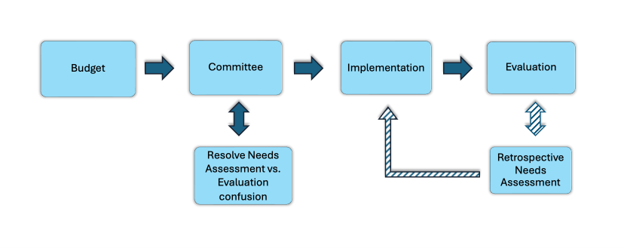
Figure 1. Needs assessment of distance learning in postsecondary STEM
Establish a budget for needs assessment. Depending on the size of the distance learning program in STEM and fiscal, human, and material resources, the size of the budget may vary. A college or university with a sizable distance learning department, hardware and software for delivering online learning, and the appropriate number of human resources will require a sizable budget. At this point, mistakes are often made in believing no resources are required when current faculty or staff are implementing the needs analysis. However, this may not be true. Hidden costs do occur as these individuals will not be focusing upon other tasks and responsibilities, or they may be extending work hours to accommodate the additional demands of the needs assessment. A sacrifice of quality in other work or incompletion of the previously assigned duties may be the cost.
Form a needs assessment committee (NAC). Make sure that committee members are knowledgeable about and have experience in conducting needs assessments. When conducting a needs assessment study of distance learning programs in STEM in a college or university, include NAC members from the involved STEM subject disciplines, the educational technology and distance learning teams, who understand the specific factors involved, and representatives from student support services at the institution and college levels with awareness of the available resources. NAC should consider the needs assessment model to be implemented, and to accomplish this defining the technology needs of the institution is critical. To accomplish this, according to the National Forum for Educational Statistics (n.d.) the first step is a “review of the overall vision for the organization's technology. This is often best accomplished by referring to the organization's technology plan. The technology plan will detail what resources already exist and what is planned. Planners can then coordinate all decision-making with other long-range planning, generally leading to results that provide far more benefits to the organization than a series of independent technology plans” (n. p.). Reconstitute NAC if necessary.
Resolve needs assessment vs. evaluation confusion. Make every effort to resolve any confusion among participants between needs assessment and program evaluation. Assessing needs is for developing a program or project, while evaluation is for judging how successfully a program or project or process is being carried out and the outcomes it generates (Watkins & Guerra, 2002). To identify this problem early in the needs assessment study, Watkins and Guerra (2002) created a brief instrument, the Assessment or Evaluation Self-Audit. On the instrument, assessment and evaluation items are arranged in odd and even numbers, respectively. Participants in the study complete the instrument. Their results on the two sets of items are tabulated. Needs-related questions should receive higher ratings than evaluation questions, although at times, the difference may not be clear.
Conduct the needs assessment. This stage is the heart of the needs assessment, where the NAC selected model is applied to the distance learning program in postsecondary STEM education. For example, if the process model is selected, then follow the phases of the process model. At this point, any interviews of potential employers, current students, and other stakeholders are conducted. Documents about discussions by faculty about specific needs in teaching for their content areas are collected. Pass and fail rates of students in the current program are examined to determine if specialized support services are needed to ensure academic success.
Conduct an evaluation. At the end of the needs assessment, the needs assessment itself should undergo an evaluation to answer the following questions. “Has the work of the group been organized into a good historical record? Are all tables and work products dated? Is everything stored and accessible so that subsequent activities like this one will not have to start over when the organization again decides to delve into its needs?” (Altschuld & Kumar, 2010, p. 143).
Conduct a retrospective needs assessment if necessary. Distance learning programs involving highly sophisticated subject disciplines (e.g., software engineering, biotechnology), often implemented with inadequate needs assessment and planning, are excellent candidates for a retrospective needs assessment. Retrospective needs assessment is a mechanism for catching up in the absence of clearly established needs. It is not the same as periodically revisiting and re-examining needs. It is for situations where the original needs assessment has missed the mark, as realized during evaluation. Below is a summary involving retrospective needs assessment in distance learning drawing from a similar scenario described by Altschuld and Kumar (2010).
A public university was concerned about undergraduate distance learning software engineering students who performed way below average on midterm examinations and apparently were not in the multinational company workforce-bound track. University administrators convinced the board of trustees to allocate a special budget for online remedial support in software engineering based on assumptions rather than a verified needs assessment. The university hired qualified faculty members, and many students started using the online remedial classes. A review of student attendance revealed that low-performing students were absent far more frequently than B-grade range (B-, B, B+) students. The university administrators conducted a retrospective needs assessment. The results of this informal needs assessment revealed the following. Students in the B grade range viewed the remedial program to advance their skills to pursue jobs with multinational companies. The other students had given up or were less motivated or suffering from personal issues. The program benefited students for whom it was not intended.
Postscript: Additional factors to consider. Stefaniak (2021) recommends conducting needs assessments in instructional technology by drawing on instructional design practices and multiple data sources, including student and graduate surveys, focus groups with administrators, students, and instructors, interviews, classroom observations (both face-to-face and online), and document analysis of course syllabi and learning management systems such as Canvas and Blackboard. O’Reilly (2016) looked at eight variables for needs assessment in educational technology for pre-service and in-service teachers, and they included technology use, technology integration, self-assessed skills, professional development, teacher beliefs, access, leadership, and demographics. Rutz (2013) reported that a needs assessment survey provided data necessary for informed decision-making around online learning in engineering education. The variables comprised of program and subject of interest, access to and availability of resources, and technology preference. Brandon (2022), when dealing with employee training in organizations, emphasized why needs assessment should take place prior to instructional design to determine the gaps in the knowledge and capabilities of employees.
Designing high quality programs
For developing high-quality STEM degree programs, guidance is available through various checklists using researched best practices for the delivery of online instruction. Typically, instructional design teams at the institution or at some institutions at the college level can assist with addressing the required components on these checklists to ensure the courses within the program and the entire program can receive a quality certification. For program certification, a team of evaluators conducts a comprehensive assessment of the program, instructor professional development, and provisions for student support services, including courses developed for student success. The Online Learning Quality Scorecard, a formal recognition awarded by the Online Learning Consortium, has a program review service. Upon completion of the evaluation, the online program receives a quality designation it can display on the program website (https://onlinelearningconsortium.org/consulting/quality-scorecard-endorsement/). Another highly respected quality badge is available through Quality Matters (2025) through its QM Program Certification Overview (https://www.qualitymatters.org/qm-reviews-certifications/program-reviews). United States Distance Learning Association also has a certification to ensure the program is using the best practices in the field (https://usdla.org/distance-learning-resources/program-certification/).
Discussion and recommendations
The purpose of this article is limited to designing needs assessment of distance learning in postsecondary STEM education, with implications for making informed decisions. Design ideas presented are aimed at generating ways of thinking about needs assessment of distance learning in postsecondary STEM education. Depending on the distance learning programs, the actions, techniques, and models outlined for needs assessment could be fine-tuned within acceptable research methodologies.
Designing and implementing needs assessments for postsecondary STEM distance learning requires careful attention to context-specific factors. In addition to these contextual considerations, the expansion of distance learning since the pandemic has created unprecedented opportunities to plan and conduct detailed needs assessment studies. Online platforms have also revolutionized academic collaboration and content delivery. Faculty and students now participate in international research projects, co-author publications, and engage in global peer review with ease, prompting needs assessments to consider how well programs prepare students for collaborative, interdisciplinary work. Meanwhile, live lectures, interactive STEM labs, and virtual symposia hosted via Zoom, Teams, and similar tools have expanded access to academic exchange across time zones and borders. These developments require needs assessments to account for not only student and faculty readiness but also institutional capacity to support effective engagement in these increasingly global and tech-integrated learning environments.
Additionally, learning management systems like Canvas, Blackboard, and Moodle now provide detailed analytics on student behaviors such as login frequency, time-on-task, and discussion participation allowing institutions to identify where instructional design and student support need strengthening. At the same time, long-distance interviews have become a practical tool for collecting input from students, faculty, alumni, and employers regardless of location, giving needs assessment committees access to a broader and more diverse range of stakeholder perspectives.
As distance learning evolves, so do the technologies shaping it pose new demands on instructional planning and institutional capacity. The same platforms that enable global collaboration and broaden access to academic experiences also bring with them a host of implementation challenges when administrators and faculty members themselves struggle with how to integrate innovations such as ChatGPT in arts, languages, and sciences, and how to regulate them in postsecondary education (Surovell, 2023). Also, often, educational institutions come under pressure to expand their infrastructure to accommodate their distance learning needs in STEM disciplines, with considerable impact on fiscal resources. The needs assessment committee should take into consideration these important contextual factors.
To keep up with the rapid developments in distance learning in postsecondary STEM education, it is essential to revisit existing needs assessment models as often as needed, placing an emphasis on improving methods to discover discrepancies. This iterative process ensures that methods for identifying discrepancies between "what is" and "what should be" remain relevant and effective. The purpose and approaches to needs assessment vary depending on the context of distance learning, yet the pace at which innovative STEM programs are being implemented necessitates ongoing evaluation. Given the continuous advancement of technology, including improvements in computer and internet infrastructure, it is critical to conduct retrospective needs assessments. These assessments provide opportunities to refine and adapt delivery models and instructional strategies, allowing for better alignment with the evolving content-specific needs in STEM courses.
Needs assessment is a powerful research method, and its findings will impact decisions on resources (fiscal, human, and material) and resource allocation within organizations and the identification and acquisition of new resources for successful implementation of distance learning in postsecondary STEM education. Effective needs assessment centers on discerning measurable discrepancies between the current (“what is”) and desired (“what should be”) conditions. The outcomes of a carefully designed and implemented needs assessment study could help design learner-centered environments and would increase the probability of institutionalizing successful innovative STEM programs in distance learning. Needs assessment findings would provide stakeholders of STEM education with the power to make well-informed decisions necessary for improving distance learning programs in universities and colleges.
Departments that considered offering a STEM degree online or migrating a STEM degree online during the pandemic may reap further benefits from conducting a full needs assessment now. The content taught in the classes should require careful analysis to ensure that the proper technology is used to support the learning of the students. The delivery of the online program requires support by systems beyond the department. Careful analysis of the learning management systems, internet speed, and technology tools available ensures the institution can support continuous reliable access to the instructional materials during peak hours. In addition to high-quality instruction and instructional materials, the postsecondary institution should provide reliable access to admission, enrollment, student support, and graduation services without requiring students to travel to campus to reap the benefits of a fully distance learning STEM degree program.
The advancement of technologies such as artificial intelligence calls for ongoing investment in the research and development of improved and innovative needs assessment designs. The inevitable role of artificial intelligence in education in general and specifically in needs assessment should not be overlooked. It is worth researching the differences between a needs assessment study conducted by a committee put together by human beings, a committee put together by an artificial intelligence system, and a committee made of artificial intelligence systems only. Designing effective needs assessment of distance learning in STEM education remains a promising area for research and development in postsecondary education.
References
Ahyanuardi, V. U., Novaliendry, D., Deswati, L., & Bahtiar, R.A. (2022). An analysis on the needs assessment of online learning program in faculty of engineering. Pegem Journal of Education and Instruction, 13 (1), 13-19.
Altschuld, J. W., & Kumar, D. D. (2005). Needs assessment. In S. Mathison. (Ed.), Encyclopedia of evaluation (pp. 276-277). (ISBN: 978-0-761-92609-2). Thousand Oaks, CA: Sage Publications.
Altschuld, J. W., & Kumar, D. D. (2010). Needs assessment: An overview. (ISBN 978-1-4129-7584-1). Thousand Oaks, CA: Sage Publications.
Altschuld, J. W., & Witkin, B. R. (2000). From needs assessment to action: Transforming needs into solution strategies. (ISBN: 978-0-761-90932-3). Thousand Oaks, CA: Sage Publications.
Brandon, B. (2022). Instructional design begins with needs assessment. Learning Solutions, The Learning Guild. https://www.learningguild.com/articles/instructional-design-begins-with-needs-assessment/
Brown, V., & Kumar, D. D. (2024). Incorporating hy-flex instructional event for online classes to Enhance computational thinking. Distance Learning: For Educators, Trainers, & Leaders, 21(2), 7-12.
Carey, S. (2022). Demand for software developers doubled in 2021. Infoworld (March 22, 2022). https://www.infoworld.com/article/3654480/demand-for-software-developers-doubled-in-2021.html
Chang, Y., & Lee, E. (2022). Addressing the challenges of online and blended STEM learning with grounded design. Australasian Journal of Educational Technology, 38(5), 163-179.
Diamond, R. M. (2008). Designing and assessing courses and curriculum: A practical guide. (3rd ed.). Jossey-Bass.
Dupin-Bryant, P. A., & DuCharme-Hansen, B. A. (2005). Assessing student needs in web-based distance education. International Journal of Instructional Technology & Distance Learning, 2(1). https://www.itdl.org/Journal/Jan_05/article04.htm
Ellis, R. K. (2018). Needs assessment obstacles to avoid. ATD Blog (June 20, 2018).https://www.td.org/content/atd-blog/needs-assessment-obstacles-to-avoid
Flowers, J. (2001). Online learning needs in technology education. Journal of Technology Education, 13(1), 17-30.
Kaufman, R. (1987). A needs assessment primer. Training and Development Journal, 41(10), 78-83.
Keebler, D. W., & Huffman, J. (2020). Effective eLearning and transformative pedagogical strategies: STEM program. International Journal of Online Pedagogy and Course Design 10(2), 61-70.
Kumar, D. D. (2003). Trends in postsecondary science in the United States. The ANNALS of the American Academy of Political and Social Science, 585(1), 124–133. https://doi.org/10.1177/0002716202238571
Kumar, D. D. (2021). Rethinking needs assessment in undergraduate STEM education. Virtual Poster presented at the Transforming Institutions Conference, Accelerating Systemic Change Network, and Network of STEM Education Centers of Association of Public and Land-Grant Universities.
Lewis, M. V. (2006). Needs, feedback, and the future: Need sensing activities in 2001. Sensing seminar. Columbus, OH: National Dissemination Center for Career and Technical Education,The Ohio State University. https://www.sreb.org/sites/main/files/file-attachments/needsfeedbackfuture_lewis-3.pdf?1630703863
McIntyre, M. M., Cui, G., & Hou, Y. (2025). Visual avoidance: Examining STEM students’ lower interest in online courses. The Internet and Higher Education, 65(1). https://doi.org/10.1016/j.iheduc.2025.100995
National Forum for Educational Statistics. (n.d.). Determining your technology needs. Forum Unified Educational Technology Suite. Author. https://nces.ed.gov/pubs2005/tech_suite/part_2.asp
O’Reilly, E. N. (2016). Developing technology needs assessment for educational programs: An analysis of eight key indicators. International Journal of Education and Development Using Information and Communication Technology, 12(1), 129-143.
Pathoni, H., Ashar, R., Maison, & Huda, N. (2021). Analysis student needs for the development of contextual-based STEM approach learning media in online learning: An evidence from university in Jami, Indonesia. International Journal of Research in STEM Education, 3(1), 17-26.
Perkins, R. A. (2019). Assessment and evaluation in online learning. Library Technology Reports, May/June, American Library Association, 31-34.
Quality Matters. (2025). QM Program Certification Overview. https://www.qualitymatters.org/qm-reviews-certifications/program-reviews
Rothwell, W., & Kazanas, H. C. (2015). Mastering the instructional design process: A systematic approach (Fifth Edition). (ISBN: 978-1-118-94713-5). Pfeiffer.
Rothwell, W., & Sredl, H. (2000). The American Society for Training and Development Reference Guide to Workplace Learning and Performance. (3rd ed. 2). Amherst, MA: Human Resource Development Press.
Rutz, E. (2013). Use of distance learning for continuing education of engineers: Results of an educational needs assessment. Journal of Engineering Education, 82, 261-264.
Stefaniak, J. E. (2021). Conducting need assessments to inform instructional design practices and decisions. In J. E. Stefaniak, S. Conklin, B. Oyarzun, and R. M. Reese (Eds.), A Practitioner's guide to instructional design in higher education. EdTech Books.https://edtechbooks.org/id_highered/conducting_needs_ass
Stewart, R. G., & Cuffman, D. M. (1998). Needs assessment: A systematic approach for successful distance education. Paper presented at the Mid-South Instructional Technology Conference, Murfreesboro, TN.
Surovell, E. (2023, March 16). Faculty members still aren’t sure what to make of ChatGPT. The Chronicle of Higher Education. https://www.chronicle.com/article/faculty-members-still-arent-sure-what-to-make-of-chatgpt
Wang, H., & Gearhart, D. L. (2006). Designing and developing web-based instruction. Pearson/Merrill Prentice Hall.
Watkins, R., & Guerra, I. (2002). How do you determine whether assessment or evaluation is required. In ASTD (Ed.), ASTD T&OD Sourcebook, 131–139. http://web.worldbank.org/archive/website01006/WEB/IMAGES/HOWDOYOU.PDF
Weldman, J., & Diggs, L. (2001). Identifying barriers to technology-enhanced learningenvironments in teacher education. Computers in Human Behavior, 17(4), 421-430
Witkin, B. R. & Altschuld, J. W. (1995). Planning and conducting needs assessments: A practical Guide. (ISBN: 978-0-803-95810-4). Thousand Oaks, CA: Sage Publications.